Fitness for service
Fitness for service
Fire Damage Assessments
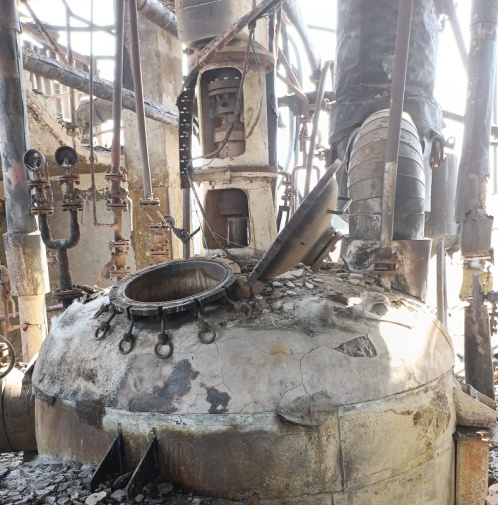
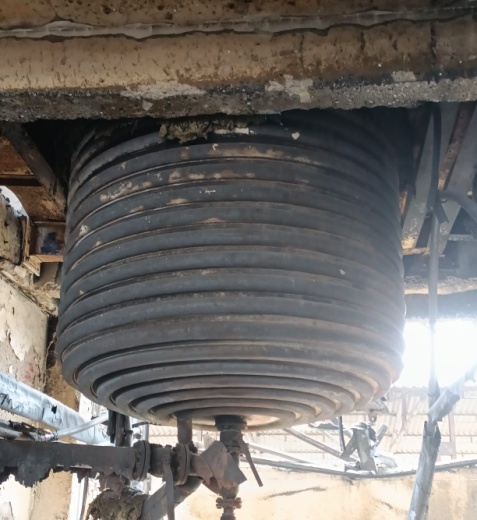
When a fire occurs on your worksite, the recovery process can be challenging and complex. Stress Engineering Services has supported dozens of Upstream, Midstream, and Downstream operators in the U.S. and throughout North America with fire damage assessments.
Our Approach
Our approach to fire damage assessment is based on the API 579-1/ASME FFS-1 Standard, Fitness-for-Service, and our extensive engineering experience in metallurgy, stress analysis, piping analysis, hardness testing, inspection, heat zone mapping and project management. Our team of professionals establishes heat zones and develops specific inspection plans for each piece of equipment. Ultimately, Level 1, 2, or 3 assessments will determine if the equipment must be repaired, replaced, or can be used as-is. A comprehensive final report documents the findings.
Heat Exposure Zones
The Keystone of Fire Damage Assessment
Heat exposure zones are a concept presented in API 579, Part 11, characterized by isobars of maximum sustained ambient temperature during the incident. A visual inspection establishes the highest temperature to which different zones were exposed. The heat exposure zones range from the highest temperature at the center of the fire, to regions that sustained no fire impact
Inspection
Level 1 assessments typically require only visual inspection, but for equipment requiring Level 2 or Level 3 assessment, inspection becomes more involved.
Hardness testing is the most frequently used type of non-destructive examination (NDE) in fire damage assessments. Heat exposure during a fire can either “harden” or “soften” the steel. “Softening” indicates a lower strength, while “hardening” indicates higher strength, less ductility, and increased brittleness in the steel.
Our experts develop specific inspection plans for each piece of equipment, enabling the client to complete the process as quickly as possible.
Level 1,2,And 3 Assessments
Whereas Level 1 fire damage assessment is relatively simple, Level 2 and Level 3 assessments require our expertise and an understanding of materials, mechanics, and plant conditions to ensure the problem is neither over-simplified nor over-analyzed.
Vast Range Of Equipment Types
Fire damage assessments can involve a wide variety of facility processing equipment, structural components, and materials. Our experts have assessed everything from tall towers to condensate drums, including aluminum plate heat exchanges, fin-fan coolers, pumps, compressors, blowers and fans, plant piping, shell and tube heat exchangers, and more.